Why channel-by-channel optimisation is incomplete
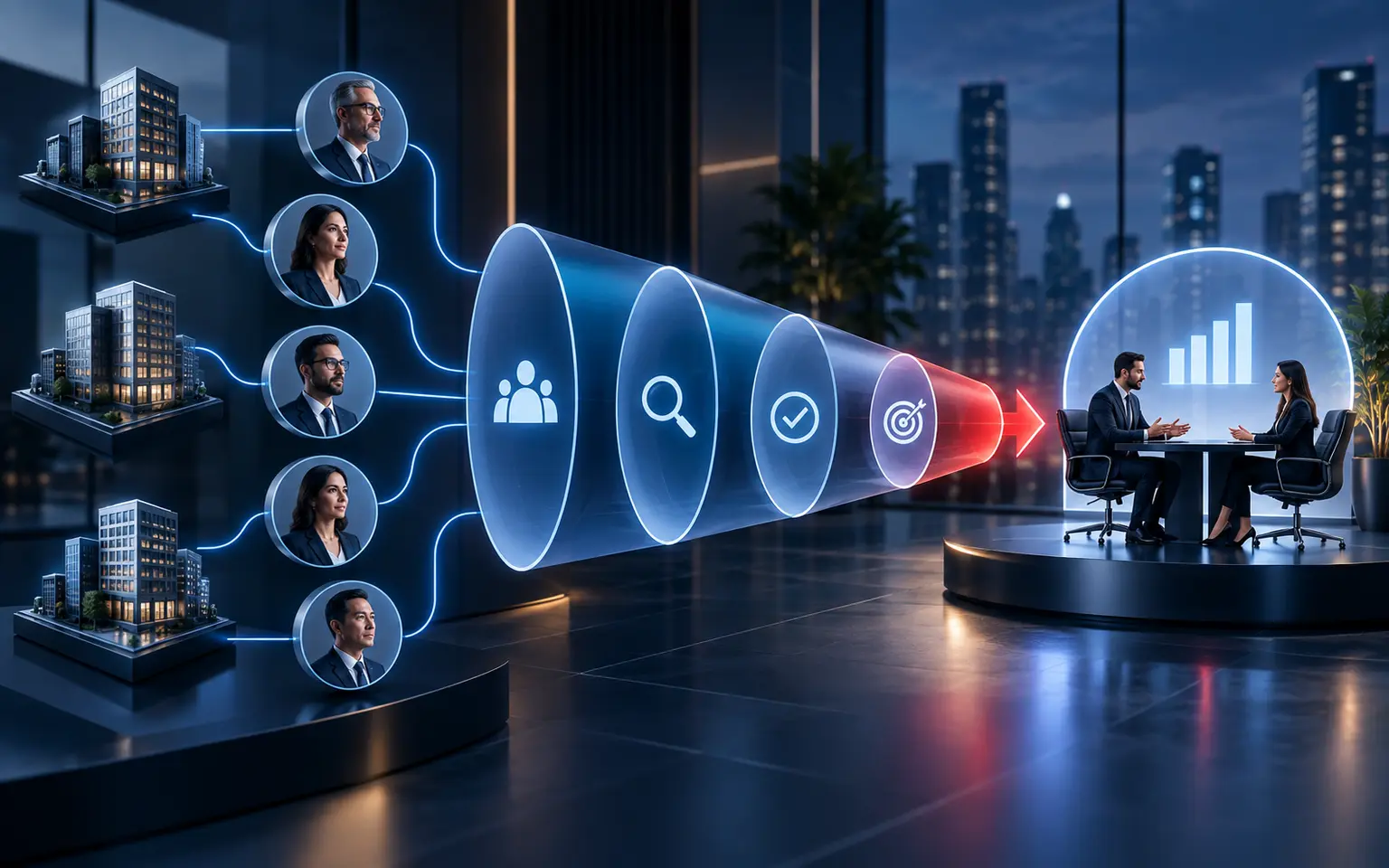
A campaign can report a low cost per click while the business receives weak enquiries. A lead campaign can produce volume while sales struggles to convert it. These gaps appear when media, landing pages, nurturing and sales feedback are managed as separate activities.
A full-funnel approach gives every channel a defined role. Some campaigns create reach and category awareness. Others capture active intent, develop engaged audiences, generate leads or recover prospects who did not convert the first time.
- Measure the progression between stages, not only the activity inside each platform.
- Use lead quality and sales outcomes to guide media decisions.
- Separate awareness, consideration and conversion objectives.
The stages of a practical full-funnel system
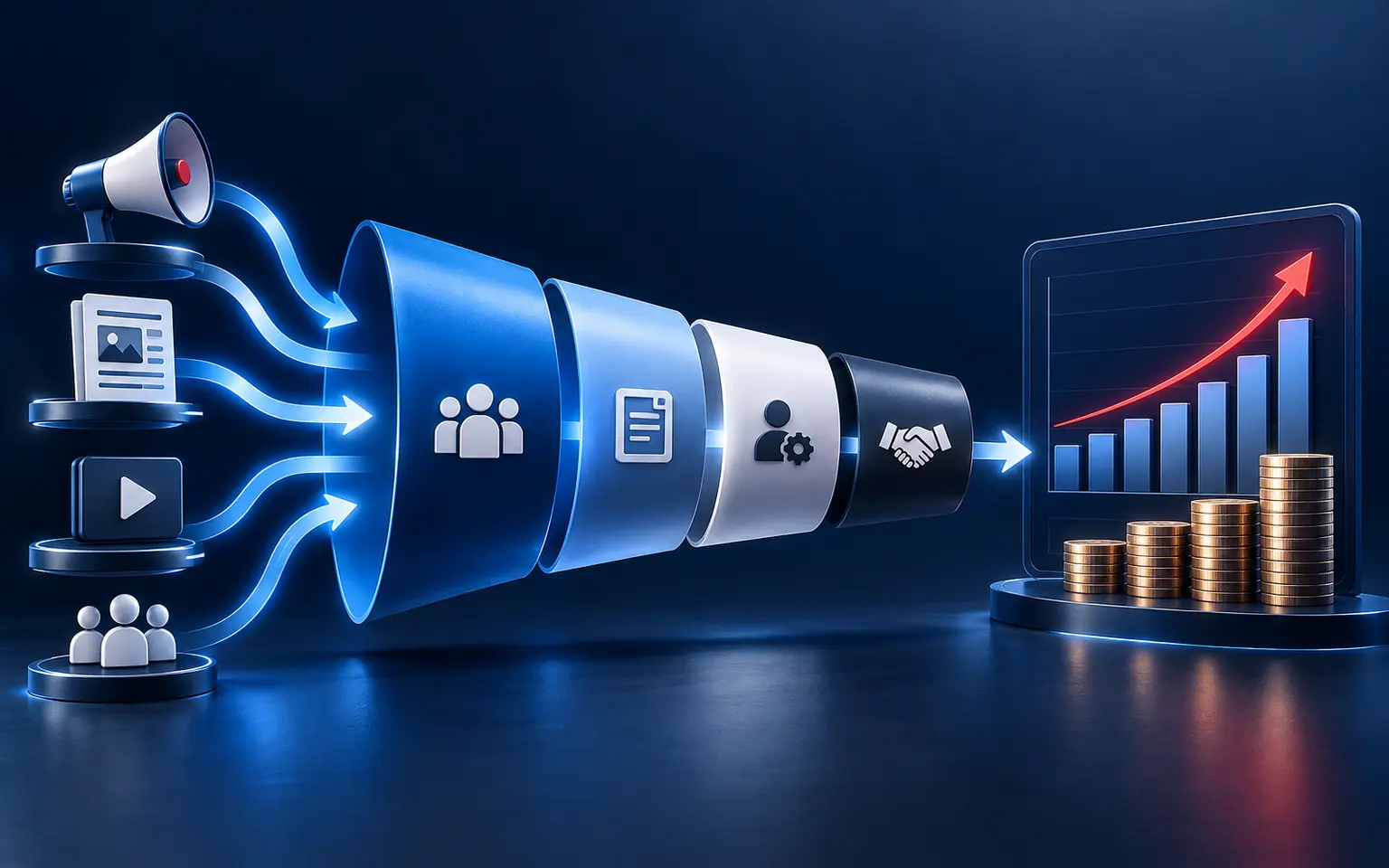
At the top of the funnel, paid social, video, creator content and thought leadership introduce the problem and the brand. In the middle, educational content, case material and remarketing help prospects evaluate their options. At the bottom, high-intent search, landing pages, offers and sales follow-up create action.
The stages should reflect the real buying journey. A high-value B2B service may need weeks of education and multiple decision-makers. An e-commerce purchase may move from product discovery to transaction within one session. The architecture must match the decision.
- Attract the right market.
- Engage with useful or persuasive content.
- Identify intent through behaviour.
- Capture and nurture demand.
- Convert and learn from customer outcomes.
How measurement changes across the funnel
CPM, reach and video completion help evaluate efficient attention. CTR and engaged-session quality indicate whether the message is relevant. CPL measures capture efficiency, but it must be read alongside qualification rate, opportunity rate, CAC and revenue.
The most useful reporting connects early indicators with later business outcomes. This prevents teams from cutting valuable awareness activity merely because it does not produce immediate last-click conversions.
- Awareness: reach, frequency, attention and audience growth.
- Consideration: engaged visits, watch depth, repeat visits and content progression.
- Conversion: qualified leads, opportunities, CAC, ROAS and pipeline value.
Building the operating rhythm
Start with the commercial objective, unit economics and sales cycle. Define what a valuable conversion means, which audiences matter and what evidence prospects need. Then assign clear roles to channels, content and follow-up.
Review performance as a system. Creative insights should shape landing pages. Search-query insights should inform content. Sales feedback should refine targeting. When learning moves across the funnel, marketing becomes more efficient and more defensible.
Key takeaway
Strong growth systems connect audience relevance, useful communication, a clear next action and business-quality measurement. The exact channel mix changes; the discipline does not.
Common questions
Is full-funnel marketing only for large companies?
No. The principle is useful whenever more than one interaction influences a purchase. The scale and technology can be adapted to the business.
How long does a full-funnel programme take to show results?
High-intent campaigns can generate early signals quickly, while audience development, nurturing and reliable commercial learning compound over a longer period.
What is the most important full-funnel metric?
There is no single metric. The useful question is how efficiently qualified demand progresses toward customer value.