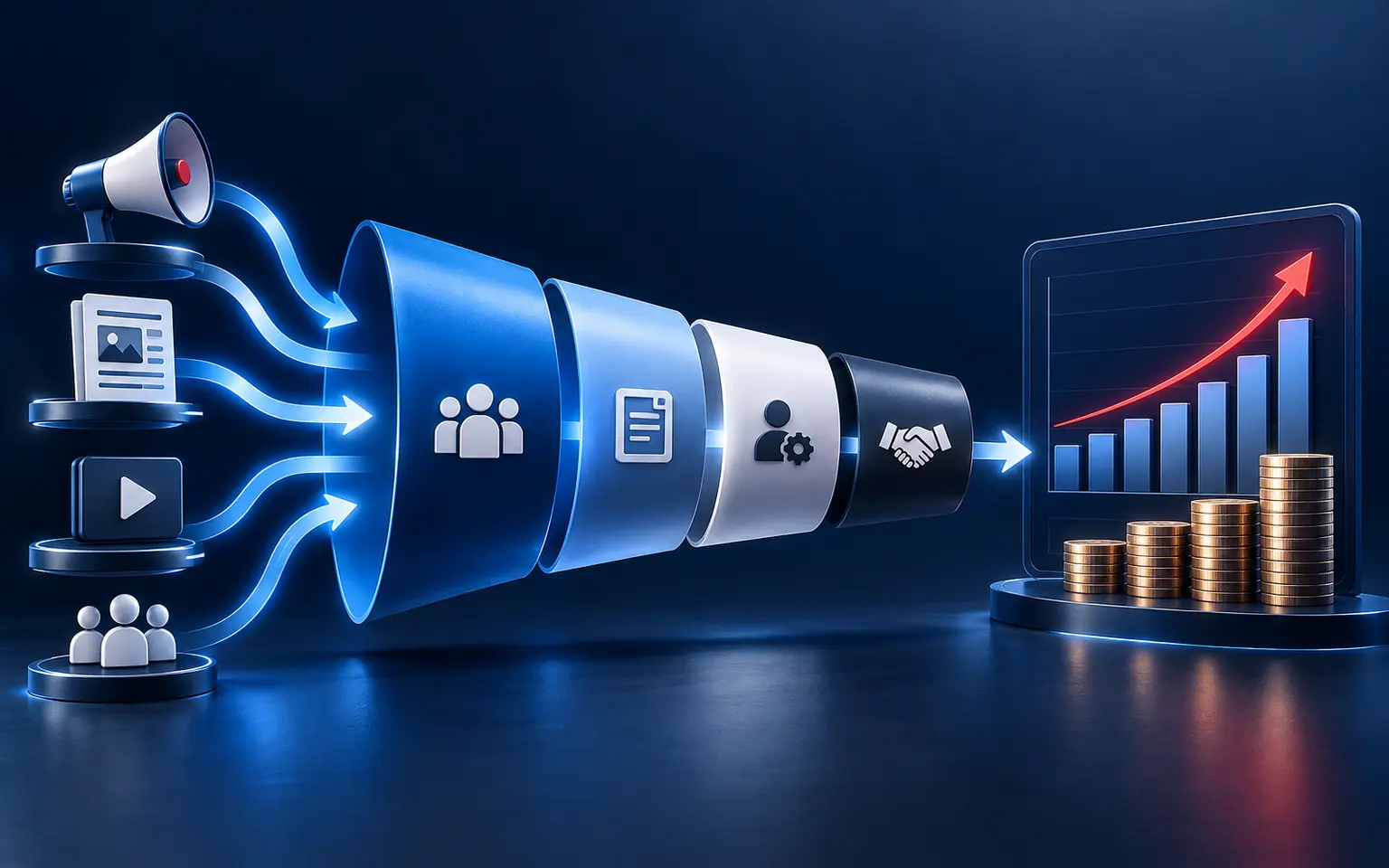

Define the right conversion before optimising it
If every enquiry is counted equally, reporting hides the difference between an ideal prospect and an irrelevant contact. Define qualified-lead criteria and record the reasons leads are rejected or progressed.
Where possible, import later-stage outcomes into campaign reporting. This lets the team see which sources and messages create real opportunities.
- Separate enquiries from qualified leads.
- Track appointments, opportunities and customers.
- Record disqualification reasons consistently.
- Report qualified CPL alongside platform CPL.
Improve audience and intent control
Review search queries, placements, geography, device, schedule and audience segments for spend that does not contribute to quality. Exclusions can improve efficiency before bids are changed.
For social campaigns, use engagement and customer signals to refine learning. Avoid narrowing audiences so aggressively that delivery becomes unstable.
- Add negative keywords from real search data.
- Exclude irrelevant locations and placements.
- Segment by funnel stage and recency.
- Use customer and qualified-lead data where appropriate.
Strengthen the offer and landing experience
A clear offer improves conversion because prospects understand the value of acting. The landing page should continue the message, provide relevant proof and make the next step feel proportionate.
Reducing friction does not mean removing all qualification. The form should collect only the information needed to route and prioritise the lead.
- Match the headline to the ad promise.
- Address the main objection on the page.
- Use a single primary action.
- Test form length against quality and completion.
Optimise creative for self-qualification
Good creative attracts the right audience and helps the wrong audience recognise that the offer is not for them. Mention the use case, customer type, location, price context or eligibility when it materially affects fit.
This can sometimes increase the visible CPL while reducing wasted sales effort and improving cost per opportunity—the more important result.
Key takeaway
Strong growth systems connect audience relevance, useful communication, a clear next action and business-quality measurement. The exact channel mix changes; the discipline does not.
Common questions
What is a good CPL?
A good CPL is one that produces customers at an acceptable acquisition cost. The answer depends on qualification, close rate, margin and customer value.
Can a longer form improve lead quality?
Sometimes. Additional questions can discourage casual responses and provide context, but unnecessary fields can also reduce good conversions. Test with sales outcomes.
Why does CPL rise when lead quality improves?
Stronger qualification may reduce volume. Evaluate cost per qualified lead, opportunity and customer before deciding whether performance is worse.